Friday, February 10, 2017

How Does One Have Faith in An Age of Doubt? Part II

In Part I “The Era In Which We Live” we discussed how our age has come to such a wide acceptance of doubt and skepticism. In this post we are trying to figure out where do we go from here?

Where Do We Go from Here
Dialogue between religious and non-religious people is not simply a matter of theology, it’s almost a matter of philosophy. This can be difficult. Some fundamentalist Christians often do not make this any easier. Because of influence of Martin Luther’s doctrine of the total depravity of man, there is a tendency to emphasize faith and Scripture while also de-emphasizing or just completely ignoring science, reason, and philosophy. This creates a tension with the modern and post-modern mind who can then begin to see any type of faith as unreasonable and unscientific while claiming to have an objective truth that seems to ignore subjective experience. For this reason many modern and post-modern men and women write off the idea that religion has anything truly unique or valuable to offer them or the world. This can be especially true, but not always, if they came from a basic Christian background and have since left the faith, because they believe they have heard all of the answers before.

The Catholic Church, however, wants to reunite faith and reason, theology and philosophy, objective and subjective, heart and mind, Scripture and science, grace and nature, the human and the divine. These were never meant to be separated, but married to each other as they collaborate together while respecting the autonomy and distinctness of the other. Faith and reason are meant to go together.

As John Paul II said,
Faith and reason are like two wings on which the human spirit rises to the contemplation of truth; and God has placed in the human heart a desire to know the truth—in a word, to know himself—so that, by knowing and loving God, men and women may also come to the fullness of truth about themselves (Fides et Ratio, 1)

How can we get faith back though if the foundation of knowledge in modern culture is doubt? We need to recapture faith and at times reshape the way it is seen.

Human beings do not begin their knowledge from doubt. If you believe all knowledge begins with doubt, you end up in self-contradiction. For if you have a doubt, and if you are to gain any further knowledge you should start with where you started which is still doubt. You then must doubt doubt itself if you are to move any further which ends up in belief. Otherwise you are believing a doubt and breaking your first rule of your way to find knowledge which was doubt. If you are to progress at all in knowledge you must begin with belief. This belief is not necessarily a religious belief, but it is a belief in something without proof. This kind of “faith” occurs all of the time. Human beings come from a human context. All human beings only learn in and through other human beings. This relationship begins first in the family. A child learns from their father and mother or guardian. There is a relationship of trust. It is pre-cognisant and slowly transitions into the cognitive faculty of the person. It begins with the basic needs being met, trusting that mother and father or guardian have the best interest in mind for you and can provide for your needs. One does not begin with radical doubt that causes one to scientifically verify that every piece of food is indeed edible or nutritious. “Faith” trusts another will provide for their well-being.


This “faith” continues as learning develops. The very fact that there is language means that one believes the other has an idea that the other is trying to communicate. One trusts the other and believes the words they are using have meaning and are accurate to the objects, actions, persons, or ideas that are being discussed. One does not refuse to use language because they doubt meaning. They trust there is a meaning and use the words with those meanings in mind. Learning is dependent upon “faith.” If we learn about other people and who they really are we trust what they tell us about themselves unless there is a reason to disbelieve what they say. We do not naturally assume the person is lying to us about their name and where they come from. We also trust and put our faith into engineers when we buy their cars, in gas stations that they provide gas, people on the road that they will not go directly against traffic on the wrong side of the road. We do not empirically test everything before we put “faith” in it. It means one entrusts themselves to another, that the other does have an objective truth to present to the one learning. This is why there is an education system. We learn from teachers because we believe and have faith that they will not lie to us, but will teach us the truth. If we doubted every single thing from a young age on and had to scientifically verify everything that was taught to us, we would never be able to increase our knowledge.

This is exactly the problem with modern science. Reducing knowledge to only the scientifically verifiable would mean that no scientist should trust the experiments of the scientific community. Scientists would be caught in re-verifying everything that was already taught. They could never move forward in knowledge of science if they proceeded to doubt everything that was already taught. The other problem is that the scientific method is based on assumptions. Science assumes that there is an intelligible world that can be known, that humans have the ability to understand the world, that there is a pattern which is predictable and not disordered, that our instruments of testing are accurate, etc… etc… As Hume pointed out just because you do an experiment 1,000 times and you get the same result, you cannot not know for certain that the 1,001 time you did it the result would be the same. Eventually, even in science, you must believe.

If knowledge is ever to expand and grow, one must believe in the authority of others. Now this “faith” does not mean that one believes everything unquestioningly or that one believes blindly. No. It simply means that the foundation of knowledge is not in doubt. It is in faith. It is in trust. And that foundation shifts the whole conversation between doubt and faith. Doubt is not for the purpose of remaining skeptical. Doubt leaves room for a new “belief.” Every scientific fact began as a “theory” as a “belief,” it started in “faith” and was tested. Doubt in one scientific theory means that there must be a better theory out there that is something a bit surer than the one we currently hold. Doubt in geocentricity led to faith in heliocentricity. It did not remain stagnant in indecision.  Doubt is meant to shift our faith on a surer foundation, not simply remain in a non-committal ambiguous disbelief.


We, however, have been lied to and we do not willingly trust in authority.
The American experiment was rooted in a distrust of authority. The American government is built upon the idea that no one branch can be trusted, hence the need for checks and balances. But we have been lied to. There is corruption in the government. There is corruption in companies. There is corruption in schools. There is corruption in the media. There is corruption in the leaders of the Church. Marriages have experienced corruption. Who then do we trust? No one? Remain in skepticism? Remain in distrust? What is the way forward? Is there a way forward?

In today’s society it’s easy to become a nihilist – believing the meaning and purpose of everything is essentially nothing, null and void. That death is the end of everything. And life was utterly hopeless, meaningless, pointless. It just was and that’s it, so get your kicks and thrills while you can, because there’s no other thing worthwhile in life. "Eat, drink, and be merry, for tomorrow we die."

If there is no real meaning in life this means then that there is no moral quality to any act. Genocide, theft, rape, murder, abortion, child abuse, judging another person, forcing someone to believe what you believe - all of these actions would simply be actions. Not good. Not bad. Just actions. But why are we outraged at injustice? Why are we disappointed with scandal? Why do we hate the idea of a dictator? Why do we insist on human rights? Because we believe that there is a dignity to the human person who has been gifted with life, liberty, and free-will to be able to choose for themselves and for others to respect those rights. This dignity can not be something rooted in cultural demands, for culture changes. Not rooted in governmental authority, for government can give and take away and be replaced. Inalienable rights must be rooted in something infinite, unchanging. The only reason people are disappointed with darkness in this world is because they know things are not the way they should be. They have seen a glimmer of light and believe that the whole world should be in the light. Any use of the word “should” points to an expectation of order. Yet if the world is and always has been chaotic and purposeless, there can be no reasonable explanation for having a “should.” Order and purpose point to something higher than purely accidental material reactions. It points to an intelligence. Whether “people should do this” or “people should not do that” “this politician should” or “that politican shouldn’t.” Shoulds can only exist in a world where we expect, want, and believe that order and justice are real things that possibly once existed and can possibly be restored again.


In our culture today there is a huge emphasis on love. Deep down we all ache for love. There is a loneliness inside the human heart that always aches for more. We are never fully satisfied. True there be moments that take our breath away and that makes us wish that moment would last forever, but they never do. We want to be completely known and completely loved in all of our vulnerabilities in all of our strengths and to be completely accepted. When we receive that from one person or another, it might give us a sense of meaning and purpose, but still we are not completely satisfied, we long for more. No material thing fully satisfies these desires. Just looking at Hollywood we can see that an attractive spouse, children, a big house, and lots of money does not mean one will automatically be happy and fulfilled. We’re looking for a love that does not end, a love that we cannot even begin to plumb the depths of. We are looking for infinite and eternal love. Is this just a false hope?


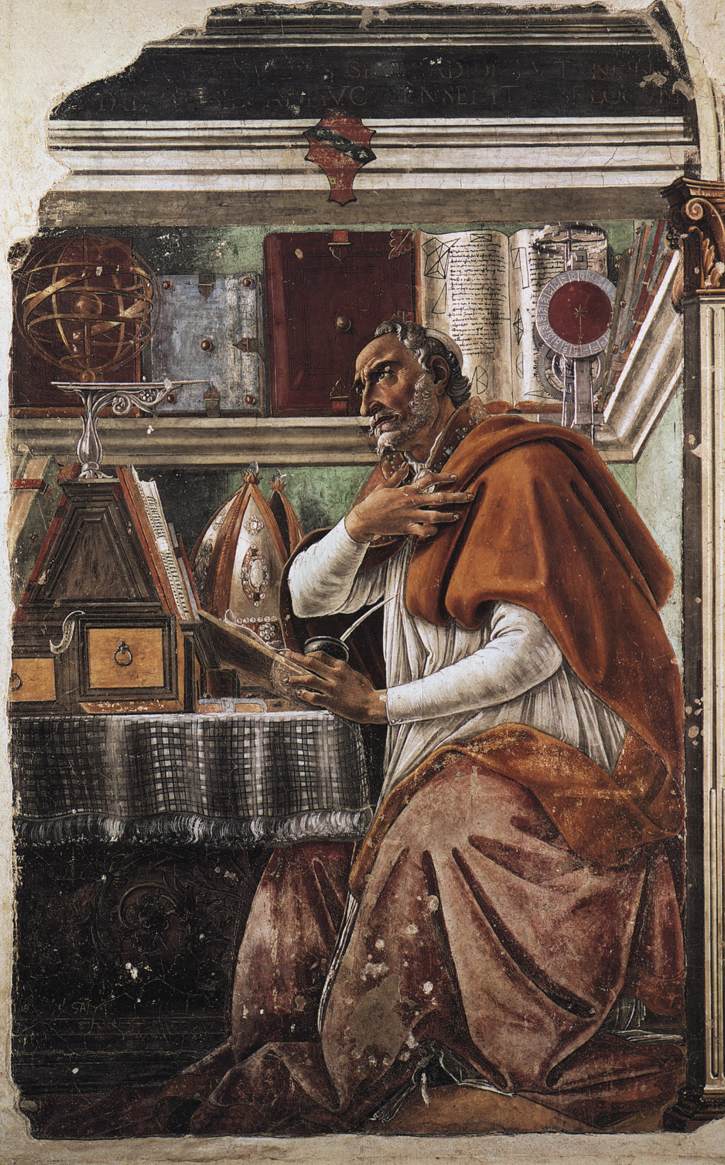
Do our desires really point to emptiness? To borrow from C.S. Lewis, all desires in nature have a fulfillment. Hunger is fulfilled in food, thirst is fulfilled in drink, sexual urgings are fulfilled in sex, tiredness is fulfilled in sleep, bodily tension in bodily relief. What then of our desire for infinite love and happiness? Does it make sense for them to come up empty? If nature always has a fulfillment for every need, how can the desire for infinite love and happiness find its fulfillment? Only infinite desires can be fulfilled in something infinite. Is it possible that there is an infinite Creator who created us with this infinite desire so that we could be fulfilled in Him? As St. Augustine said in his Confessions, “Our hearts are restless O God until they rest in You.”


God may or may not be a possibility? But how does that lead to explicit faith in Jesus? Part III coming soon…

Thursday, February 9, 2017

How Does One Have Faith in An Age of Doubt? Part I

When I asked what kind of things should I cover in my blog, a friend from high school wrote…
How to reconcile faith with the doubt that is inherent in humans. Just saw Silence, and I'm fascinated with this question. How men of faith can keep their conviction in the face of darkness and the silence of a higher power is something I'd love to see explored from the perspective of faith.

This blog is a small attempt to answer these great questions. I apologize in advance because my mind automatically tries to see the big picture. So know that I will start with how I see this topic in the grand scheme of things and gradually get narrower and narrower in order to answer it more completely. The topics will go as follows...

Part I      The Era In Which We Live
Part III    Why Jesus? Why the Church?
Part IV    The Role of the Encounter
Part V     Consolation, Desolation, and Silence in Prayer
Part VI    Faith in the Face of Suffering and Darkness


Part I. The Era In Which We Live
We are living in a time of shifting beliefs, opinions, and ideologies. In the West, there is an unprecedented rise in unbelief . In the United States in the last five years alone, the religiously unaffiliated have risen from 15% to 20% of all adults. In that 20% are 13 million self-described atheists and agnostics who make up 6% of the US adults. Faith in some kind of organized religion seems to be on the decline, while doubt seems to be ever-more on the rise. What is the basis for this rising doubt?


I’m going to paint with very, very broad strokes very, very quickly but it’s to illustrate a general idea to make a path in which to understand where we have come from, where we are now, and where we can go. It will not be exact and it will not take into account all the complexities that come into play with history and belief, but simply try to explain things in generalities.

We will start with a brief history of different periods of time, some that occurred chronologically and some that occurred simultaneously with some overlap.

Classical Greek - The Greeks were theistic and emphasized the use of reason in order to come to the divine objective truth. Greek philosophers from Socrates to Plato to Aristotle all were seeking objective truth in order to come knowledge of the divine.
Classical Hebrew - The Hebrews were theistic and emphasized faith in order to come into a subjective divine relationship. Throughout Scripture there is an emphasis on the heart as an experiential way of coming to know God who speaks to His people.

Early Christianity – the Middle Ages - In the early Church an interesting thing happened. The Greek world and the Jewish worldview collided. The Catholic Church then attempted to have the two come together so that faith would seek understanding. Faith and reason then should work together to contemplate the truth. The objective truth and reality should have a profound impact on one’s own subjective experience and relationship with God. This is exemplified by the scholastics and the Catholic emphasis on universities and education as a way of spreading the truth of reason and the gift of faith in a relationship with God. Philosophy was seen as the handmaid of theology.


The Protestant Reformation called into question the Church and thus also scholasticism, as it thought that faith had become too “Hellenized,” too Greek, too pagan. The belief in total depravity, that man was corrupted by the fall of sin, led to the belief that reason and philosophy were not helpful ways to come to knowledge of the God. Theistic faith was emphasized while reason was held to be suspect.

The Renaissance tried to recapture the Greek ideals and refocused on the objective truth through philosophy and the sciences yet was not extremely focused on the Scriptural understanding of faith. Theistic reason was emphasized while downplaying the role of faith.

Modern Period – Descartes ushered in the modern period with his “Cogito ergo sum.” “I think therefore I am.” Descartes fundamentally shifted the epistemological foundation of all of Western civilization. He said that knowledge essentially started with doubt. Doubt everything. Trust nothing. Do not even trust your senses, because they can deceive you. What then is the basis for coming to any sure knowledge of anything? Hence “I think therefore I am” If I am doubting, I must exist, that is the basis for knowledge. Things in the Western world have never been the same. Doubt was seen as the first disposition. Skepticism was seen as the beginning of knowledge. The Enlightenment and Scientific Revolution occurred and the need for faith was no longer necessary to come to a knowledge of objective truth. This led to an atheistic emphasis on reason and the sciences to come to a knowledge of truth.


The Post-Modern Period - After science and reason did not leave the world in a more harmonious condition, after technology no longer created, but led to destruction as it did in World War II. There was a calling into question of any objective truth and the ability of reason and science to come to any meaningful objective truth for humanity. There is now an emphasis on the feelings of the heart and a subjective way of discovering what works for you and your relationships without any connection to the objective truth or any connection to a universal principle for all of humanity or to God.

Our current culture has influences from every period of history but mostly draws from the Modern Period and Post-Modern Period so you will find this strange conglomeration of people claiming that the scientific method is the only basis for any credible knowledge but everything else can be doubted, and that there is no such thing as objective truth because what is true for you may not be true for everyone else. Contemporaries often believe that people are no different than animals, but then we have this strange idea that humans have inalienable rights. People see the truth as an individual decision in order to seek their own happiness but one should not infringe upon the rights of another to seek whatever temporarily makes them happy. The problem of competing rights and competing ideologies of what leads to happiness creates friction. Whose version of happiness should get preference over another? The stronger? The more powerful? The problem of evil and tragedy, political unrest, and terrorism frustrate and upset modern men and women and their preconceived notions of reality. How do we understand these frustrations and any traumas of life? Is there any meaning? Any at all?


Pope Francis provides an excellent commentary on this development,

Faith was thus understood either as a leap in the dark, to be taken in the absence of light, driven by blind emotion, or as a subjective light, capable perhaps of warming the heart and bringing personal consolation, but not something which could be proposed to others as an objective and shared light which points the way. Slowly but surely, however, it would become evident that the light of autonomous reason is not enough to illumine the future; ultimately the future remains shadowy and fraught with fear of the unknown. As a result, humanity renounced the search for a great light, Truth itself, in order to be content with smaller lights which illumine the fleeting moment yet prove incapable of showing the way. Yet in the absence of light everything becomes confused; it is impossible to tell good from evil, or the road to our destination from other roads which take us in endless circles, going nowhere (Lumen Fide, 3).


The question is, “Where Do We Go From Here?” stay tuned for Part II.


For more information, check out these resources:
Peter Kreeft – Back to Virtue
James W. Sire – The Universe Next Door 

Monday, February 6, 2017

The Problem with Polemics in the Immigration Debate, Part II

Last post we started talking about some of the complexities about immigration. This post I hope to add a little bit of my own experience of what I have learned from serving the poor, living in Belize, working in Mexico, serving Mexican immigrants in Detroit, traveling to Israel and Palestine, meeting Chaldean Christians with Iraqi heritage, and driving through Dearborn, Michigan.

One thing to keep in mind during this post: All of us come from a certain context. There is no such thing as a completely unbiased opinion since we all have our own experiences which shape the way we take in knowledge and how we try to integrate them to formulate our worldview. My hope is that these small portions of my life experiences show how complex points of view really are. I am not trying to convince anyone of any one side or asking anyone to make any conclusions from my own experiences, but rather show how each person comes from a particular context which shapes the way they see the world and how they form their opinions. In doing so I hope to encourage people to not simply hear the stated opinion of others but to also get to the roots of their experiences which shape the “why” of that opinion. If we do this without empathy we can box people in, “Oh you think this way because of that.” But if we do it with empathy then we can enter into real dialogue. “Oh I never saw things that way. I can see why you may have that opinion. Here’s my experience, have you ever tried looking at that this way?”

Home
One thing my mom can tell you is that I invite everybody over. She has lost count of how many people we have hosted at our house. Those who were just stopping through or those who came specifically to visit. My attitude is generally “Come over… we’ll figure it out later if we have enough room or food… just come over… it’d be great to have you…” When it comes to the practicals and the implications of those decisions, I often don’t pay attention to that. This post tries to tease some of those things out a bit when it comes to immigration.


Serving the Poor
I have always loved Mother Teresa and I knew from around the time of high school that I wanted to serve the poor in some capacity like she did. It is amazing to encounter Christ in the poorest of the poor. The idea is so romantic. And it is. And it is beautiful. But it’s also very messy.

In Detroit, there is a man who comes by the parish asking for just a little bit of money to find a place to stay during the cold winter nights. He’s been coming for years. Each year a new brother comes, there’s a new plead for help. He has a very sad story and I feel really horrible about the way he lives. In the past, he asked for money, and a priest gave him some so he could stay at one of the local shelters. But it turns out he had been kicked out of all of the shelters and was not allowed back in. He’s a cocaine addict. The priest offered to send him for free to a drug rehabilitation center, but he refused. We have been in the park down the street playing soccer while he snorted coke on the benches right in front of us. A priest offered to find him a job and to find him a place to stay. He took him up on those offers and for a time worked the job and lived in the house of a woman for a small amount of rent. But again his cocaine addiction prevented him from keeping the job and so he was fired and then he could not pay rent and was back on the street. Over and over again this priest offered to spend a good amount of money to send this man to a drug rehabilitation center, but this man refused. He still asks for money, and still asks for food, and for a place to stay and constantly guilt-trips anyone if they do not give him what he wants. People offer what they can when they can, but he still refuses to go to the drug rehabilitation center. So the question is, if he continues to ask for money what do you do?

It’s hypocrisy to call yourself a Christian and chase away a refugee or someone seeking help, someone who is hungry or thirsty, toss out someone who is in need of my help.       ~ Pope Francis.
Give to him who asks of you, and do not turn away from him who wants to borrow from you. (Luke 12:33)
Give alms from your possessions. Do not turn your face away from any of the poor, so that God’s face will not be turned away from you. (Tobit 4:7)


I whole-heartedly agree with Pope Francis and these Scripture verses, they are part of the Gospel message. The difficulty comes in when just giving what people want does not actually solve the problem but can actually add to it. What do you do if they refuse the help they most need and by giving them lesser means of help it is only complicates the problem? I don’t think these Scripture verses answer this question perfectly and I do not think they’re meant to. Throwing a Scripture verse or even a papal quote related to the situation does not  automatically clear up the complexity of the situation nor it does not give another person the right to judge another’s Christianity to be authentic or not. The question is not if we help them, but how can we give them what will actually be for their good and the good of others. That answer is always more complex.

The same is true with the issue of immigration. There are plenty of Scripture verses that talk about welcoming the stranger, hosting refugees, and taking care of the foreigner. This is the Gospel message and we must do it. Giving a Scripture verse though to proof-text one’s own point of view as if it was as simple as that often becomes a means of shutting down dialogue rather than opening up dialogue. From what I have seen with Catholic disciples on all sides of the issue of immigration is that all agree that immigrants and refugees should be given safety, welcomed, and integrated into a safe society somehow, the question is how? Where? When? By what process? How can we ensure safety for all involved? Scripture can tell us what to do, but it does not speak necessarily of how to do it. We must consult the Word of  God to see how it can inform our decision, but this does not mean that it can be translated 1 for 1 into each and every experience. It can give a guiding principle, but it often does not speak to the specificities that national policy sometimes demand. Pretending that Scripture does is a bit disingenuous and a politicization of the Word of God. This does not mean that Scripture has nothing to tell us about how we should run our public policy, it only means that it does not tell us everything about HOW we manage public policy. This is where the nitty-gritty of human work and dialogue come in.

Living in Belize and Working in Mexico
As many of you know I lived for three years in Belize on the border of Guatemala in a small town called Benque Viejo del Carmen. It is my home away from home. The people of Belize are a part of my family. They are MY people. I only hope that they consider me as one of their own. I would encourage everyone to go to Belize and experience the beauty of the place and the beauty of the people. The three years I had in Belize as a volunteer were the best three years of my life thus far. I never knew I could love other people like I did there. I always hope for the opportunity to visit again. I rarely felt in danger while I lived in Belize and visited Guatemala, I lived in a safe town, but even though that is the case, there are some truths that are hard to ignore. When my family came to visit in 2011 we visited the tiny little island of Flores in Guatemala. A week later on a farm in San Benito the town JUST across the bridge there were 27 people beheaded by a machete. Growing up, I never knew people personally who had family members who were murdered, raped, extorted, kidnapped, robbed at gunpoint, or involved in gangs or drug cartels. But in Belize, I knew many. It’s heartbreaking. Friends and students of mine have had their fathers, their mother, their sister, their brother, their friends, and their nephews murdered. You mourn with them and their families and it’s heartbreaking. It is so surreal. There are no words that can adequately express your sorrow or give any kind of clear answer as to why any of these things happen. But there’s two common sayings that mourners tell themselves to help one deal with it, “this is life” or “This is Belize.”


Belize is not out of the ordinary in Latin America. 42 out of 50 of the most dangerous cities in the world not at war are in Latin America. Four are in the United States (2 of them I have lived in: Baltimore and Detroit). (Click here and here for more information).

Murders in city per 100,000 people
Murders in State/Country per 100,000 people
Guatemala City 101
Guatemala 31.2
Belize City 101
Belize 34.4
St. Louis 59
Missouri 6.1/ USA 3.9
Baltimore 55.3
Maryland 8.6/ USA 3.9
Detroit 43.6
Michigan 5.7/USA 3.9

Belize protects its border from Mexico and from Guatemala and vice versa. Many Central American countries can be strict about who they let into their country and deportation happens pretty frequently (I've been on 2-3 public bus rides in Belize where the police pulled the bus over and a group of Guatemalans, El Salvadorians, or Hondurans were then deported from Belize). Some of those crossing the border into Belize were wanted for murder, rape, drug trafficking, or gang violence and some were guilty of those things once they entered into Belize. Some were trying to escape the violence of their country of origin. How does one know which one is which? It’s not always so easy to know. The majority of the United States is not like a lot of the rest of the world in the way it offers opportunities, the way it views the equality of women, the way public safety is enforced. This does not mean the United States is better by any means, it just means that we do have a lot to offer the rest of the world (as they have a lot to offer us) and we should not keep it for ourselves, but it also means we have to understand that not everyone coming into the United States has the same mentality as to how a society should run (not that all people now in the United States have the same mentality but that there are some worldviews inimical to the way of life that the general public in the US desire).

In the border town of Nuevo Laredo, Mexico right across the river from Laredo, Texas violence soars high. It’s a different world just across the border. It’s amazing how different two places can be less than a mile apart. Border towns are often hubs for drug and human trafficking. In 2012, there were 288 murders in Nuevo Laredo, Mexico, but 8 murders in Laredo, Texas. The people of Nuevo Laredo are amazing people and it’s encouraging to see their strong faith. Neighborhoods hold their own Posadas during Advent and their own Stations of the Cross during Lent. They each have their own “base communidad” - base community - within the large parish and do works of mercy together as well as pray as families together. There is a gift these people have to offer. (For a beautiful account of ministry in Nuevo Laredo, click here) There are also stories of great tragedy. I wasn’t there when these things happened, but I heard about the stories of three men being hung from a bridge over the highway and the story of a woman who blogged exposing some of the local crime whose body was left in the public square. Are the borders creating the conditions for this kind of environment to exist? Or are the borders keeping those kinds of behavior out of the United States? I do not know the answers to those questions and I won’t pretend to.

For many of the people I talked to, the US was the "land of opportunity" where one was guaranteed to make it in life, where one could easily get a good job, pay rent, eat food, get transportation, and there would be little difficulty etc... Some literally think that because one is an American they have thousands of dollars in cash at their disposal and they are automatically rich. I had to explain that it's not that easy, it's much more expensive, and it's a lot harder to make it, there’s no guarantee, it could actually be worse in the US if you're starting from zero than if you try to make it in Belize, Guatemala, or Mexico simply because of the cost of living and transportation. This was a hard concept for many to grasp because of the images many of them receive through the media.

Another aspect to add is that many students I know had relatives in the United States. It was not uncommon for a father to leave their family in Central America and go to the United States to get a job and for him to send money back for his wife and children. This kind of set-up separates families and can be a situation that sometimes led to infidelity. In addition to this, the question becomes, is this fair for a host country to be paying those who earn it only for them to send it out of the country? How can the local economy profit if that money is being used elsewhere? But this is also what international charities do to an extent should they be stopped? I don’t think so. But I also don’t know the answers to these questions.

Israel and Palestine
This past summer I had the opportunity to travel to the Holy Land. It was powerful to visit the land that Jesus lived in. It was my first time in the Middle East and it was really impressive to see the way that Christians, Muslims, and Jews intermingled in the city. Yes there were some areas designated for the different groups, but there was a lot of cross-pollination between the different religions and cultures. Jerusalem was beautiful, clean, and well-kept. But as soon as we came to the border into Palestine we saw a huge wall built around it. Once we entered Bethlehem, the world inside was different. The buildings were a lot more dilapidated and some were crumbling. There was a lot trash. The way people dressed was much different than the way people dressed in Jerusalem. We talked to an important Palestinian Catholic official who began to explain some of the problems in Palestine. He explained how they felt choked by the wall and that they were not able to start businesses, that the military was unfair in which houses they went into, that the poverty in Palestine in a lot of ways was due to the fact that the wall separated them from family members and work opportunities. He said it can take up to 3 hours to do examinations for daily crossing the border and you cannot do so without a permit. He explained that sometimes Christians who support Israel do so unquestioningly due to their interpretation of the Bible. These verses are some of the ones that are used…

Pray for the peace of Jerusalem: they that love thee shall prosper. Peace be within thy walls, and prosperity within thy palaces. For my brethren and companions’ sakes, I will say now, peace be within thee. For the sake of the House of the Lord our God I will seek thy good (Psalm 122).
I will bless those who bless you, and whoever curses you I will curse and all peoples on earth will be blessed through you (Genesis 12:1-3).
 For the nation and kingdom that will not serve you shall perish; those nations shall be utterly laid waste (Isaiah 60:12).           

He explained that this reading of Scripture focuses on the land of Israel. But in Christ the promises of the Old Testament are perfectly fulfilled so that all people of all nations, of all lands, shall inherit these promises, not just Israel. Now it seemed to me that there were clearly at least some injustices being done to the people of Palestine. Yet since the building of the wall Israel has seen a 90% decrease of suicide bombers in Jerusalem. Is it due to the wall? Is it due to other factors? Does Israel have the right to protect their people in that way? Is the wall and some of the injustices going on now going to create conditions that could lead to more unrest later on?  I don’t know the answers to these questions, one visit does not make me an expert. I am only stating what I saw and heard and that is very limited. I know that I stand against injustice, but I do not know how best to stop those injustices politically. I simply share this story to show the complexity of some of these issues.


Detroit
Right now I live at a parish made up primarily of Mexican immigrants. The people here are some of the most amazing people I have ever met. Generous, self-sacrificing, loving, helpful, involved, humble, Christ-centered servant-leaders. The culture and faith that they brought with them is a huge gift not only for the Church but for the United States itself. As far as them being good people, they put me to shame. Immigrants are not people to be feared, but people to be treasured. They bring with them a people-centered colorful hospitality filled with life.


“Build bridges not walls.” The church is surrounded by a brick wall. This wall has had two cars crash into it in the past three years. That wall has protected our building from those accidents. There’s a courtyard just beyond the wall. At times there have been people who came into that courtyard to relieve themselves, 1 and 2. If that wall was not there, would that open up it’s use to more occasions like these? I don’t know. Obviously, this is no comparison and it’s not meant to be. It’s just meant to show that in our own ways, whether through fences or locked doors, we don’t let just anybody come onto our property, but that does not mean that we are exclusive or anti-anybody. This is not a defense for the wall or a plea for no walls. It’s just meant to show that there are different perspectives on everything and there is room for reasonable disagreement.


Chaldean Christians
In Detroit, there are a lot of Chaldean Catholics, Catholics who culturally or literally come from Iraq and who pray in Aramaic in some of their liturgies. One of my favorite things in Detroit is visiting a Chaldean liturgy. I do not have a lot to offer on their perspective, nor am I qualified, but I only offer that I know some were frustrated with the previous administration and how some felt that Christians in Iraq had been overlooked and abandoned by the United States, while Muslims were given more liberty to enter the United States. 


Dearborn
Again I do not have a lot to offer on this topic and I am no expert on it. I can only say that driving through Dearborn, Michigan is like driving into a different world. I never knew that a suburb in the United States had multiple mosques, many signs in Arabic, and a street where the majority of women who seem to walk down it are Muslim women in hijabs or niqabs. I know some people who grew up in Dearborn who are concerned that they’ve lost their hometown. And I know that others are happy about the diversity that is present. I am not making judgments one way or another. I am simply noting the diversity and the challenges it brings. I recently had the opportunity to talk with a few Muslims as we were trying to evangelize people at a college campus who were open to it. I think all of them were very respectful and very kind. We entered into dialogue with some of them and still they were very respectful as they represented their points of view and genuinely listened to ours. Many smilingly received rosaries. There was one lady wearing a hijab who said she was not Muslim but only wore this because she knew her parents wanted her to.  There are all kinds of Muslims on all ranges of the spectrum. Now last year a Muslim man was arrested from there for wanting to plan an attack on a large church in downtown Detroit. Our church is large and it is in downtown Detroit. Are there other large churches in downtown Detroit? Yes. But it felt very close to home. Now obviously not all nor even the majority of Muslims are like this. And it's worth noting that his father, a Muslim, was the one who reported him. But if that “one” was successful in what he was planning to do, it does indeed make a difference. We should not pretend that the majority makes the minority insignificant or non-consequential. There are consequences and we are all trying to learn how to understand how to neutralize that minority who are radical.


This is just a hodge-podge of some of my experiences from a very limited point of view and are not exhaustive by any means or stretch of the imagination. I just present this, again, in order to show how peoples’ personal experiences could cause them to make certain judgments about certain things. I do not want anyone to make any judgments or conclusions based on my own experiences alone. I do not even want to do that myself, because if I want an inclusive world, that means I have to try to include other worldviews and try to see how or if I can integrate them with mine in order to come to a more comprehensive conclusion about reality.


The past two posts have been about the complexity of different issues. The next post will try to tackle the Church's role and responsibility in entering into the debate. It’ll be coming soon….

Tuesday, January 31, 2017

Does Morality Depend on Religion?

I was recently asked this question, “Can a person have a morality without a religion?”

It is indeed possible for an atheist or agnostic person to have a moral code that they follow without the guidance of any religion. Atheists can have certain moral principles that they uphold and do so with consistency, believing that there is good to be done and evil to be avoided. Some may not use the terms "good" or "evil," but "human" or "inhumane" or other equivalents. There are in fact many atheists and agnostics who are more morally upright and disciplined than many baptized Christians. So it is possible to have a morality without any kind of religion.


The question though is what is the foundation for an atheist’s morality? From an atheistic point of view the world as we know it and everything in it came into existence by happenstance and all life evolved from lower life forms due to the biological processes of evolution. There is no ultimate purpose, order, or meaning to the universe, it all just happened.  And if there is no ultimate purpose, order, or Orderer that brings forth some kind of spiritual and moral order to these biological processes, doesn't it become a lot harder to ground one’s morality rationally and consistently

Problem 1 Determinism: if there is no spiritual component to human persons, who are only the result of the biological and chemical processes of evolution, this means that every action that is made by a human person is only the result of animal instinct, acting and reacting to certain stimuli without any real moral choice. Moral reasoning is only chemicals acting and reacting to external or internal stimuli in the body that cause it to act. This eliminates choice. If there is no choice, how can actions be good or evil if everyone must do what their own biological make-up decides for them? Or is there an explanation for how human persons developed the ability to make moral choices?

Problem 2 Survival of the Fittest: if we are all the result of an anomaly in nature and we developed due to evolution by means of the survival of the fittest, could this mean then that some humans or groups of humans may be more evolutionarily advanced than others with varying thoughts or worldviews of how we are best to evolve and adapt as a species to our world situation? Would enslaving or getting rid of humans who are less evolutionarily advanced be a way of ensuring the survival of the fittest? Or is there something that makes every human life objectively good that would suggest this kind of behavior is wrong or evil? Is "good," "evil," "human," or "inhumane," just the current majority's position now, but there is no overall basis in reality for what makes these actions really good or really bad?


Problem 3 Rational Animals but still Animals: If humans evolved from animals without anything else besides their rational ability to give them any more dignity or worth than any other animal, why then would it be wrong for a man to kill children of another family?  Male lions kill the cubs of a new pride they join, but we do not have a moral problem with that. Is there a difference in actions qualitatively from other animals or are they essentially the same? Why or why not?


This obviously does not fully show the extent of an atheist's argument for why they believe there is a morality, nor does it give them the chance to respond to these questions, which they may have reasonable responses to. It's just meant to scratch the surface to some of the issues that could stem from having a morality not based in any type of religion.

From a Catholic perspective we would propose that God has written the natural law on every person’s law so that we can know generally what actions are good and what actions are evil. This does not automatically mean that God exists, it just means that our morality is based on something other than simply human thought and so is grounded in something more eternal than current social standards.

The Catechism of the Catholic Church states,
1956 The natural law, present in the heart of each man and established by reason, is universal in its precepts and its authority extends to all men. It expresses the dignity of the person and determines the basis for his fundamental rights and duties:
For there is a true law: right reason. It is in conformity with nature, is diffused among all men, and is immutable and eternal; its orders summon to duty; its prohibitions turn away from offense . . . . To replace it with a contrary law is a sacrilege; failure to apply even one of its provisions is forbidden; no one can abrogate it entirely.
1959 The natural law, the Creator's very good work, provides the solid foundation on which man can build the structure of moral rules to guide his choices. It also provides the indispensable moral foundation for building the human community. Finally, it provides the necessary basis for the civil law with which it is connected, whether by a reflection that draws conclusions from its principles, or by additions of a positive and juridical nature.
For Catholics, the moral law is rooted in an eternal Lawgiver who made humans in His own image and desires that they fulfill the good for which they were created so that they can share in His happiness.


The Catechism of the Catholic Church states,
1954 Man participates in the wisdom and goodness of the Creator who gives him mastery over his acts and the ability to govern himself with a view to the true and the good. The natural law expresses the original moral sense which enables man to discern by reason the good and the evil, the truth and the lie:
The natural law is written and engraved in the soul of each and every man, because it is human reason ordaining him to do good and forbidding him to sin . . . But this command of human reason would not have the force of law if it were not the voice and interpreter of a higher reason to which our spirit and our freedom must be submitted.
1955 The "divine and natural" law shows man the way to follow so as to practice the good and attain his end. The natural law states the first and essential precepts which govern the moral life. It hinges upon the desire for God and submission to him, who is the source and judge of all that is good, as well as upon the sense that the other is one's equal. Its principal precepts are expressed in the Decalogue. This law is called "natural," not in reference to the nature of irrational beings, but because reason which decrees it properly belongs to human nature:
Where then are these rules written, if not in the book of that light we call the truth? In it is written every just law; from it the law passes into the heart of the man who does justice, not that it migrates into it, but that it places its imprint on it, like a seal on a ring that passes onto wax, without leaving the ring. The natural law is nothing other than the light of understanding placed in us by God; through it we know what we must do and what we must avoid. God has given this light or law at the creation

Monday, January 30, 2017

The Problem with Polemics in the Immigration Debate, Part I

If you’re going to start a blog, why not start with the most controversial thing that everybody is talking about?! Actually I was asked a question about this and ever since then it’s been on my heart and mind to write about the topic of immigration. It breaks my heart to see the situation that is going on and also to see how it has led to tearing others apart. It’s a difficult topic and I don’t expect to answer every question or to allay every concern. I don’t desire to stir the pot, but rather help defuse the tension.

Since it’s a complicated issue, it’s going to take more than one post.

Part I is going to be just a basic Introduction to the issue of immigration.
Part II will be about my own very limited lived experiences of immigration.
Part III will be about what role the Church plays in adding confusion or clarity
Part IV will be about the importance of distinctions in dialogue.

I am not an expert on these topics, but if I can help one person think about these issues even just a little bit deeper, I will have succeeded. Let’s get started…


A lot of us have recently seen, have been told or have used these phrases in the past week,
 You’re not pro-life, you’re pro-birth because you don’t care about the poor, the needy, the immigrants, and the refugees. 
A Christian builds bridges not walls. If you build walls you are not a Christian.
 You’re not Catholic if you do not welcome refugees. Jesus said to welcome the stranger
 It’s hypocrisy to call yourself a Christian and chase away a refugee or someone seeking help, someone who is hungry or thirsty, toss out someone who is in need of my help  ~Pope Francis. 
I don’t understand how someone can call themselves a Christian if they are against refugees coming into the United States.
 Maybe you think that you have a right to refuse a person in need. And that you have the right to protect yourself. Well, we do have the right of self-protection. But refusing the one in need because you want to protect yourself, especially when the other is in desperate need and obvious danger, is not what Christianity is about. ~Fr. James Martin, SJ


If people have said these phrases to you, let me begin with: I don’t judge you. And let me also say if you have used any of these phrases to explain your position to someone else: I don’t judge you either.

When it comes to the policies, procedures, politics, and implications of decisions about immigration, illegal immigrants, refugees, national security, naturalization, or the effect that these things have on the well-being of one’s own country and other countries, let me be the first to admit: I do not know how any of it works. I am probably the least knowledgable person on what actually happens with policies and implementation concerning immigration. I am completely ignorant as to how the process works and what it means for citizens of the welcoming country and for immigrants.

Yet as this crazy past week progressed, I have continually seen the phrases above said and re-said and something just did not sit right with me, but I was not sure what. But I’ve thought about it and I think I understand what it is.

I know amazing Christ-centered, poor-serving, stranger-welcoming, generous, and loving Catholics on both sides of the debate and those stuck somewhere in between. And I know if refugees, immigrants, or the poor knocked on their door asking for help or some kind of assistance, the majority of them would do something to help them. Invite them in for a meal. Offer them a place to stay. Help them find housing or an organization that would be able to assist them. These people are not only pro-birth, they are emphatically pro-life. None of these people are against immigrants, against refugees, or the poor. The problem is when one’s involvement with immigration is not direct and it becomes a process two-or-twenty-or-thirty steps removed from the person’s daily life. If I am honest, and I say this to no discredit to the majority of families, but I don’t think most families have any idea of how immigration actually works or should work. If it came down to themselves as individuals being asked to take care of a refugee family, the majority of Catholics I know would do something. They would see the faces, they would know their names, they would be directly responsible for what happens. They would feed the hungry. Give drink to the thirsty. Shelter the homeless. Welcome the stranger. They would do what the Gospel asks them to do.


Now imagine if a homeless man with no known background asked to stay the night at your house. Many people I know would be willing to put their own lives at risk in order to serve them, and they should be commended for doing that. But some would not feel comfortable doing that, not necessarily because of their own safety, but because of the safety of their children or spouse. The question then becomes, should they feel the need to the put the ones they love and are responsible for at risk? And I think that’s where a lot of the difficulty comes. I do not think there is an easy answer to that question. And the answer may be different for different people and different families. This is a tension that pastors in different countries may face for confronting drug cartels, for accepting Muslim converts, or for preaching on controversial topics. Many pastors in those situations would be willing to live the Gospel radically and die for their faith, but some are much more apprehensive about putting the lives of their own flock at risk. There does not seem to be an easy answer. (See the movie Silence to understand that angst). And this is the difficulty with allowing refugees into the country. Are most probably harmless? My guess is yes. But what about the possibility that there is one who is not? Are you willing to risk your own life to find out? What about the lives of your siblings, parents, children, nieces, nephews? I am not trying to scare anyone out of thinking they should help immigrants or refugees, I simply want others to know about the real tension that exists in the lives of people who are concerned and are really working through these issues as we all are working through them.


And when it comes to policies, procedures, governments, and agencies it becomes more complicated and it enters the complex world of politics, a thing most people aren’t familiar with and aren’t comfortable with. And I think it’s important to remember that. It’s important to remember that these matters are complicated. They are complex. The future is unknown. And I think it’s important to remember if the future is unknown, we must be honest, we do not really know the implications of welcoming refugees or immigrants, if it will be helpful or hurtful for our country simply because one does not know the future. We know we should help them, but do really know the absolute best way how? One could definitely say it would be a good deed to welcome refugees and immigrants, but one does not know what the welcoming of refugees and immigrants will actually effect – the economy? job security? public safety? family life? a loss of culture? the lives of the ones we love? And people fear the unknown, and that’s okay. Fear is natural. It’s human.  This fear does not mean people then should not welcome the refugee or immigrant. But it also does not mean that people who are afraid of or concerned about the consequences of a more open policy on immigration are anti-immigrant, xenophobic, racist, Islamaphobes, anti-Mexican, only pro-birth, or not Chistian.

It simply means it is a scary thing when a person has no control over others making decisions for them and their family, not knowing what consequences will result from those decisions.
 
This is the fear of refugees. This is the fear of welcoming countries. This is the fear of a father who loses his job and doesn’t know how to support his family. This is the fear of a newly wed mother realizing she’s pregnant when she doesn’t feel ready. This is the fear that some people felt when Obama was elected. This is the fear some people feel now knowing that Trump is president. This is the fear of a person who discovers they have cancer and entrusts themselves to their doctors. It is a fear I face in my vocation with obedience knowing that I will one day be sent somewhere and I have seemingly no control over how that decision will go. Sometimes legitimate fear can help one make more prudential decisions, but fear can also stop one from doing the good that they should do. We must take other peoples’ fears into consideration when we talk with them, when we walk with them.

Wherever one falls on the spectrum on this topic, if a person has a good reason for what policies they think are most consistent with the Christian faith, explain them tenderly, back up your opinion with evidence, acknowledge the complexity of the situation, relate with peoples’ fears and concerns, don’t accuse, don’t assume, listen to others’ perspective. “A fool takes no pleasure in understanding, but only in expressing his opinion.” (Proverbs 18:2) 

If we cannot in charity lump all refugees and immigrants into one category and write them off, neither can we in charity lump all people who are cautious about refugees and immigrants into one category and write them off.

We must listen. We must be calm. We can be passionate, but we must listen. 

Serving the poor, living in Belize, working in Mexico, serving Mexican immigrants in Detroit, meeting Chaldean Christians with Iraqi heritage, driving through Dearborn, Michigan and traveling to Israel and Palestine have given me a new perspective on this… Stay tuned to Part II to hear about it…


Saturday, January 28, 2017

Blogging - Let the Fun Begin!

Why Blog? 
I’ve thought a lot about doing a blog before because I really enjoy writing and I really enjoy teaching, but that wasn’t the motivation I was looking for. I was unsure of what I could really offer to the ever-growing blogosphere. After some closer examination and encouragement from other people, I realized that a lot of people have said in the past they benefited from something I had written or said that was unique or said clearer than others had explained it before. That was enough for me. If I can teach and write and help others learn, then why would I hold back? I hope this helps at least one other person.


How It’ll All Go Down 
Consistency has never been my strong suit, so a daily blog is out of the question. So I’ve decide to limit it to at least a weekly/bi-weekly blog. Not on what I want to talk about, but whatever you want to talk about on the things of faith and life, how to integrate spirituality into one’s daily life, how to come to a deeper understanding of who Christ is, how to discern, what are the teachings of the Church, social doctrine, what are my experiences and what have they taught me about the world and how it all relates back to Jesus and His Church. If you have any questions that you think would be interesting for me to cover, feel free to leave them in the comment box below or feel free to message me. 


Disclaimer 
What I am writing are my own thoughts and these thoughts are coming from a 30 year old religious brother who has lived on only a small section of planet earth from 1986 until present. I grew up a Catholic white male in Maryland and have moved around quite a bit ever since college, but am currently residing in Detroit. What this means is that I have a limited point of view. I haven’t experienced all that life has to offer and so I don’t know everything about everything nor everyone. My answers will be limited just as my experience is limited. I want to try to answer all questions in the context of the Church’s teachings and stay true to them as best as I know how, because while I may be only 30 years old, the Church has been around all over the world a lot longer, so sticking to her teachings expands and universalizes my knowledge over a larger span of time and places than I would ever be able to on my own. If I am wrong in anything I have said, I defer to the teachings of the Church and her judgment. I apologize ahead of time for any mistakes I may make and for any generalizations that don’t ring true to your experience. I will try to be clear when I am making a generalization and when I am trying to be more specific. Also know that there are experts, theologians, philosophers, scholars, and researchers who know a lot more than I do, and they are worth consulting or researching. There’s no need to take what I say as the ultimate authority. What I write is only a proposal, an invitation, to see things the way I see the Catholic Church proposes its teachings. I do not want to impose my beliefs on anyone or to say that it is the only way to see things. These are just the best answers I have come up with. If anyone disagrees with what I have said or finds an error in anything I have said, please point it out. I will try to correct any errors as quickly as possible. I thank you for your patience and I hope you enjoy the ride as much as I do.